

Handcrafted cedar hot tubs
built in the Hudson Valley
Hudson Valley Hot Tubs builds cooperage-crafted cedar hot tubs in Tivoli, NY — round cedar soaking tubs in four sizes, a shou sugi ban charred black finish, and a cedar ice plunge. Every tub is made by hand from clear western red cedar and installed by the team that built it, throughout the Hudson Valley and Catskills.
Every tub we make is built to order — sized for your site, finished to your preference, and installed by the same team that built it. No catalog. No factory. No shortcuts.
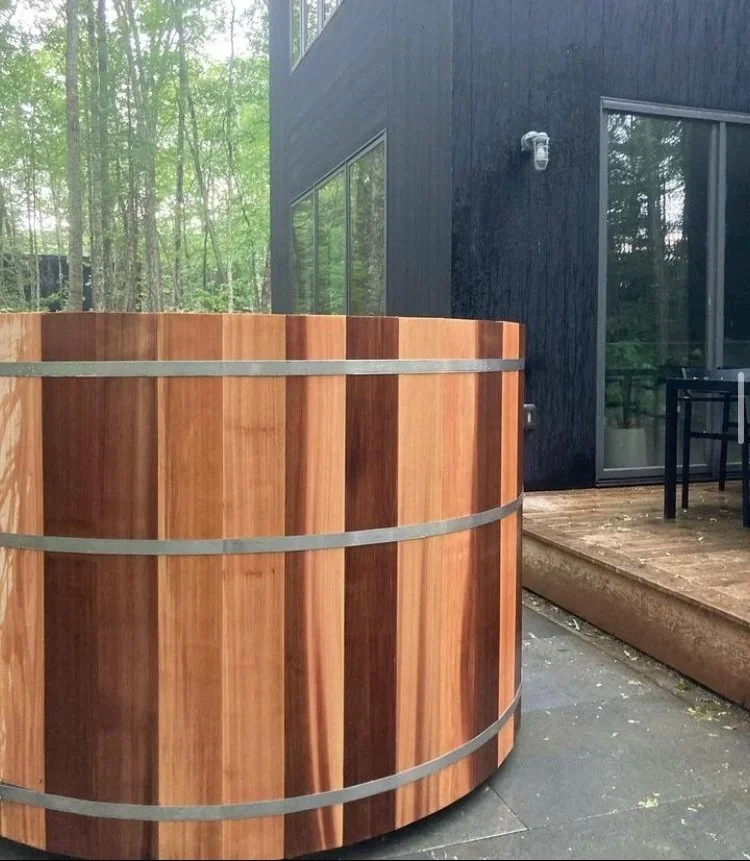
Classic cedar soaking tub
Round Cedar
Hot Tub
The classic cooperage form — vertical cedar staves fitted and banded with stainless steel, shaped into a round vessel built to outlast the property it sits on. Non-jetted or jetted. Natural finish or shou sugi ban charred black. Four standard sizes.
Western red cedar is naturally resistant to rot and moisture, naturally insulating — keeping water warm longer than acrylic — and handles Hudson Valley winters without cracking, fading, or losing structural integrity.
| Size | Capacity | Best for |
|---|---|---|
| 5 × 4 ft | 3–4 people | Couples, small decks, intimate soaking |
| 6 × 3 ft | 4–5 people | Narrower footprint, deeper walls |
| 6 × 4 ft | 4–5 people | Most popular — generous but manageable |
| 7 × 4 ft | 5–6 people | Family, AirBnB properties, group use |
- Clear western red cedar staves — no knots, no filler
- Stainless steel banding — marine-grade, no rust
- Non-jetted or jetted — external electric heater available
- Natural finish or shou sugi ban charred black
- Built to order — typically 6–10 weeks from deposit
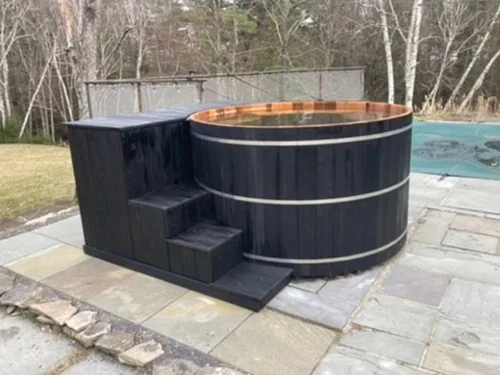
Charred cedar finish
Shou Sugi Ban
Black Cedar
Shou sugi ban is a Japanese woodworking tradition — the surface of the cedar is charred with fire, then brushed and sealed. The result is a matte black finish that is visually striking against any landscape: stone patios, modern architecture, wooded hillsides, waterfront properties.
The charring process increases the wood's natural resistance to moisture, insects, and UV. A shou sugi ban cedar tub ages differently than a natural cedar tub — darker, more dramatic, more permanent-looking.
- Same cooperage construction — all four sizes available
- Traditional fire-charring process — not a stain or paint
- Enhanced resistance to moisture and UV
- Available with or without jets and all standard equipment
Natural cedar
Warm honey tones on installation. Ages to a silver-grey patina. Aromatic cedar fragrance.
Shou sugi ban
Deep matte black. Bold contrast against any setting. Carbonized surface for enhanced durability.
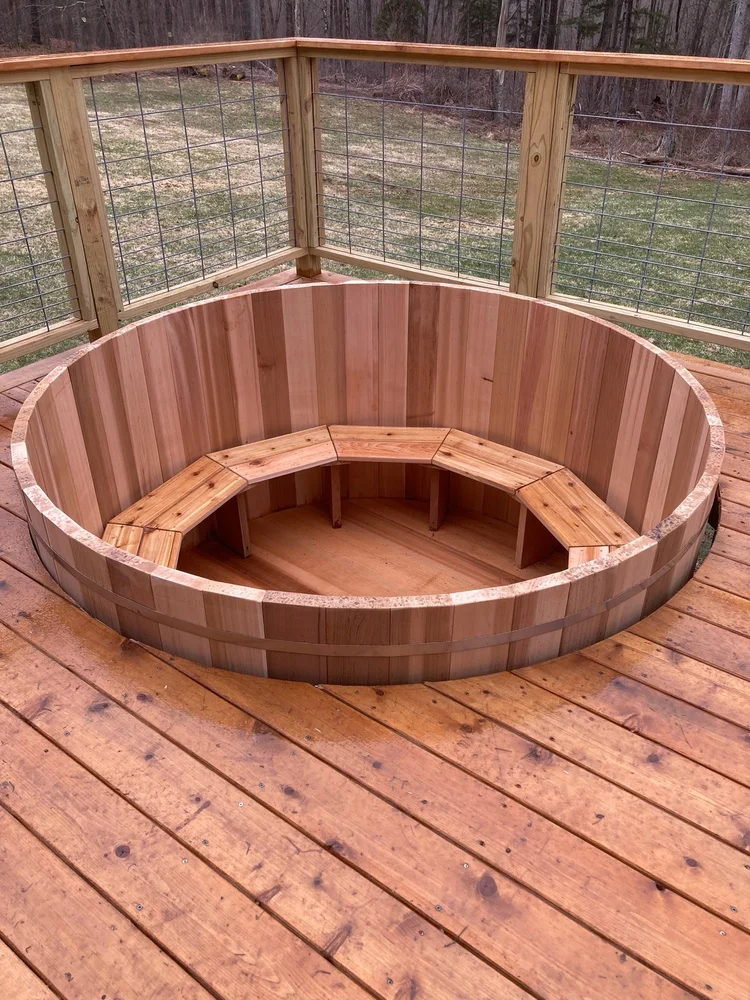
Cold therapy
Cedar
Ice Plunge
Our cedar ice plunge is a 24-inch wide, single-person cold plunge vessel — built with the same cooperage construction as our hot tubs. Designed for contrast therapy, performance recovery, and year-round cold immersion.
Cedar is the ideal material for a cold plunge vessel. The natural insulation of the wood keeps cold water cold longer, the antimicrobial properties reduce chemical requirements, and the aesthetic — a cedar barrel frosted in winter — is striking in any setting.
- 24" wide — single person, full immersion
- Same cooperage construction as our hot tubs
- Naturally cold-insulating western red cedar
- Pairs perfectly with a hot tub for contrast therapy
- Natural or shou sugi ban finish available
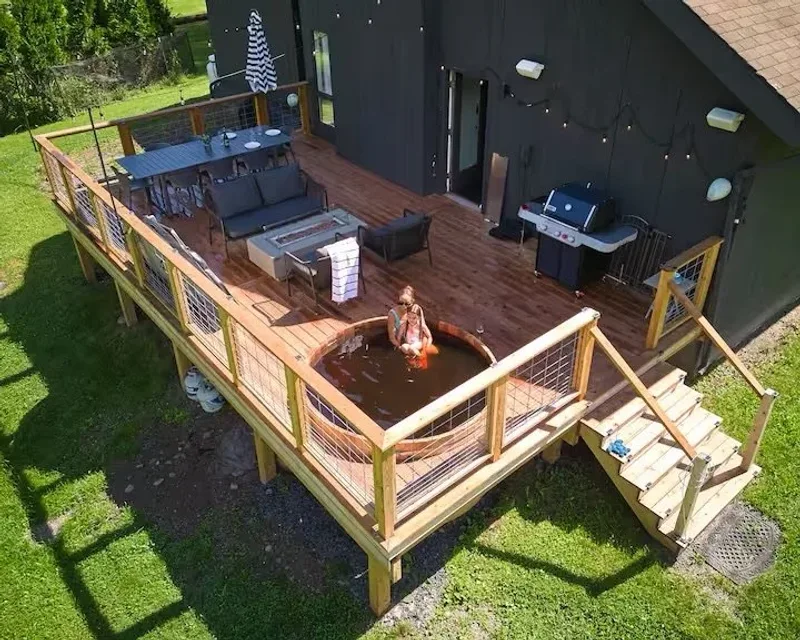
Equipment & heating
Heaters, jets
& accessories
Cedar hot tubs can be configured with or without mechanical equipment. Non-jetted cedar soaking tubs are the simplest option — heated by an external electric heater, with no jets or pumps inside the vessel. For clients who prefer jets, we configure jetted systems that work with the cedar construction.
- External electric heaters — efficient, simple, no internal mechanical components
- Jetted systems — available on all sizes, coordinated with licensed electricians
- Wood-fired heating — traditional option on select configurations
- Covers & insulation — fitted cedar or insulated covers for heat retention
- Cedar decking & surrounds — custom-built to match your tub and site
Why cedar
A natural alternative to
plastic & acrylic hot tubs
Cedar is not the cheapest option. It requires more attention than an acrylic shell. But for buyers who understand what they are getting, cedar is unambiguously the better long-term choice — for durability, for the soaking experience, and for what it looks like on a Hudson Valley property in twenty years.
Full cedar vs. acrylic comparison →Naturally insulating
Cedar keeps water warm longer than acrylic, reducing heating costs over the life of the tub.
Aromatic & therapeutic
The scent of western red cedar is documented to reduce cortisol and enhance relaxation.
Eco-friendly
Sustainably sourced, biodegradable, chemical-resistant. No fiberglass, no petroleum-based materials.
Long-lasting beauty
Cedar ages into a warm silver-grey patina that blends into any natural landscape.
Quiet soaking
Non-jetted cedar tubs offer a completely silent soaking experience. Just heat and water.
20–30 year lifespan
A well-maintained cedar tub will outlast two or three acrylic replacements.
The cooperage tradition
Built by hand.
Every single one.
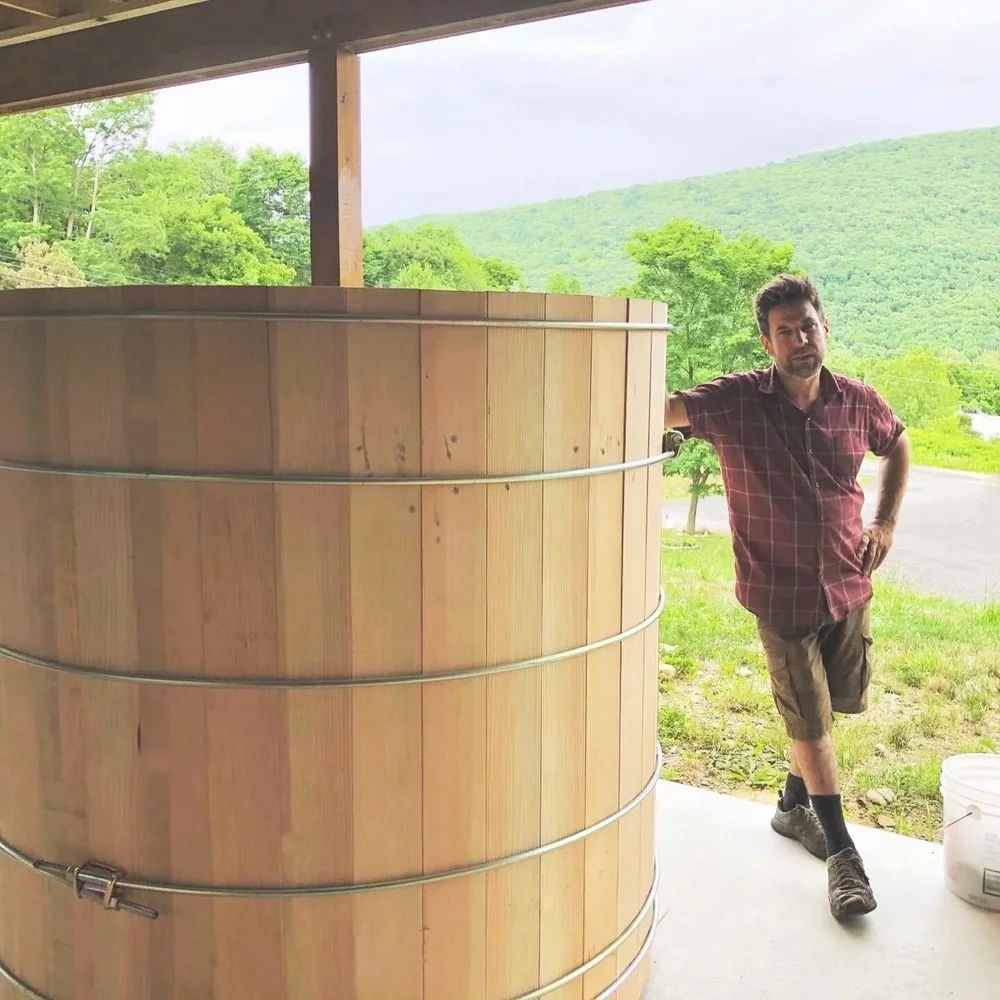
Cooperage — the craft of shaping staves of wood into a watertight vessel — is one of the oldest woodworking traditions in the world. John Cox applies those same principles to every cedar hot tub built at our Tivoli workshop.
Each stave is milled from clear western red cedar — selected for grain, checked for knots, and fitted by hand. The staves are shaped, assembled, and banded with stainless steel. No adhesives. No synthetic materials. The vessel tightens as the wood swells with water — the same physics that made oak wine barrels watertight for centuries.
When you buy a tub from us, you are buying a hand-built object from a named craftsman in a specific workshop. John Cox builds it. Our team installs it. There is no factory, no distributor, and no gap between the person who made it and the person responsible for it.
Meet John Cox & our story →How it works
From first call
to first soak
Every tub is made to order. The process is straightforward — consultation, build, installation, done.
Consultation & sizing
We discuss your site, usage, and preferences — size, finish, equipment, decking. No pressure, no upselling. We give you what fits your property and your budget.
Built to order
Your tub is built at our Tivoli workshop. Lead time is typically 6–10 weeks from deposit.
Delivery & installation
We deliver and install — site placement, plumbing connections, initial fill, and a full owner walkthrough on operation and maintenance.
Cedar hot tub guides
Everything you need
before and after you buy
Full cost breakdown — tub, installation, electrical, and 30-year ownership comparison.
Weekly chemistry, seasonal draining, wood care, and how to keep your tub performing for 20+ years.
Why cedar thrives in Hudson Valley winters, how to winterize, and why many owners prefer soaking in the cold.
Common questions
Cedar hot tub questions
answered honestly
Are cedar hot tubs worth it?
Yes — for the right buyer. Cedar hot tubs last 20–30 years with proper care, age beautifully, and carry none of the structural issues of acrylic shells. The natural cedar material is thermally efficient, naturally antimicrobial, and develops a rich patina that acrylic never achieves.
What are the cons of an acrylic hot tub?
Acrylic shells crack and fade in cold climates, lose insulating properties over time, and have a typical lifespan of 10–15 years — compared to 20–30+ for a well-maintained cedar tub. They also look dated quickly in a natural Hudson Valley setting.
What is the most trouble-free hot tub?
Non-jetted cedar hot tubs are among the most reliable long-term. Without mechanical jets and pumps inside the vessel, there is very little to fail. Water chemistry is the primary ongoing task.
How long will a cedar hot tub last?
20 to 30 years or more. The cooperage construction — stave and band, no adhesives — actually tightens over time as the wood absorbs water and swells. Some cedar tubs from quality builders have lasted 40+ years.
Are cedar hot tubs hard to maintain?
No — but they require consistent attention. Weekly water chemistry checks and a seasonal drain-and-refill are the core tasks. Cedar is gentler on water chemistry than acrylic. We provide a complete maintenance guide at installation.
Can you put Epsom salt in a cedar hot tub?
Yes, in moderation. Epsom salt is gentler on cedar than chlorine-heavy regimens and is popular among owners who prefer a more natural soaking experience.
How long can you leave a cedar hot tub empty?
Extended dry periods can cause staves to shrink slightly. The tub re-seals as the wood swells when refilled. A periodic soak-and-drain cycle is recommended for long empty periods or vacation properties.
What are the pros and cons of cedar?
Pros: naturally insulating, antimicrobial, aromatic, 20–30 year lifespan, beautiful aging. Cons: requires active water chemistry attention, initial cost is higher than entry-level acrylic, and periodic maintenance over its lifespan.
Where we install
Cedar hot tubs throughout
the Hudson Valley
We install in all 8 counties. Select yours for local installation details and featured towns.
