

Cedar hot tub maintenance:
the builder's guide
Cedar hot tubs are low-maintenance relative to acrylic — but they are not no-maintenance. Consistent water chemistry, seasonal draining, and basic wood care keep a cedar tub performing for 20 to 30 years. This guide covers everything John Cox tells every new owner at installation: what to do, how often, and why cedar behaves the way it does.
Why cedar maintenance is different
Cedar behaves like wood,
not like plastic
Acrylic and fiberglass hot tubs are sealed, inert surfaces. Cedar is a living wood — it responds to moisture, temperature, and chemistry in ways that are both a strength and a responsibility. Understanding those responses makes maintenance much easier.
Western red cedar contains natural oils — thujaplicin and related compounds — that make it naturally resistant to rot, bacteria, and fungal growth. This is why cedar has been used for water vessels, barrels, and cooperage for centuries. In practice, it means cedar tub owners often need lower chemical concentrations than acrylic tub owners to maintain the same water quality.
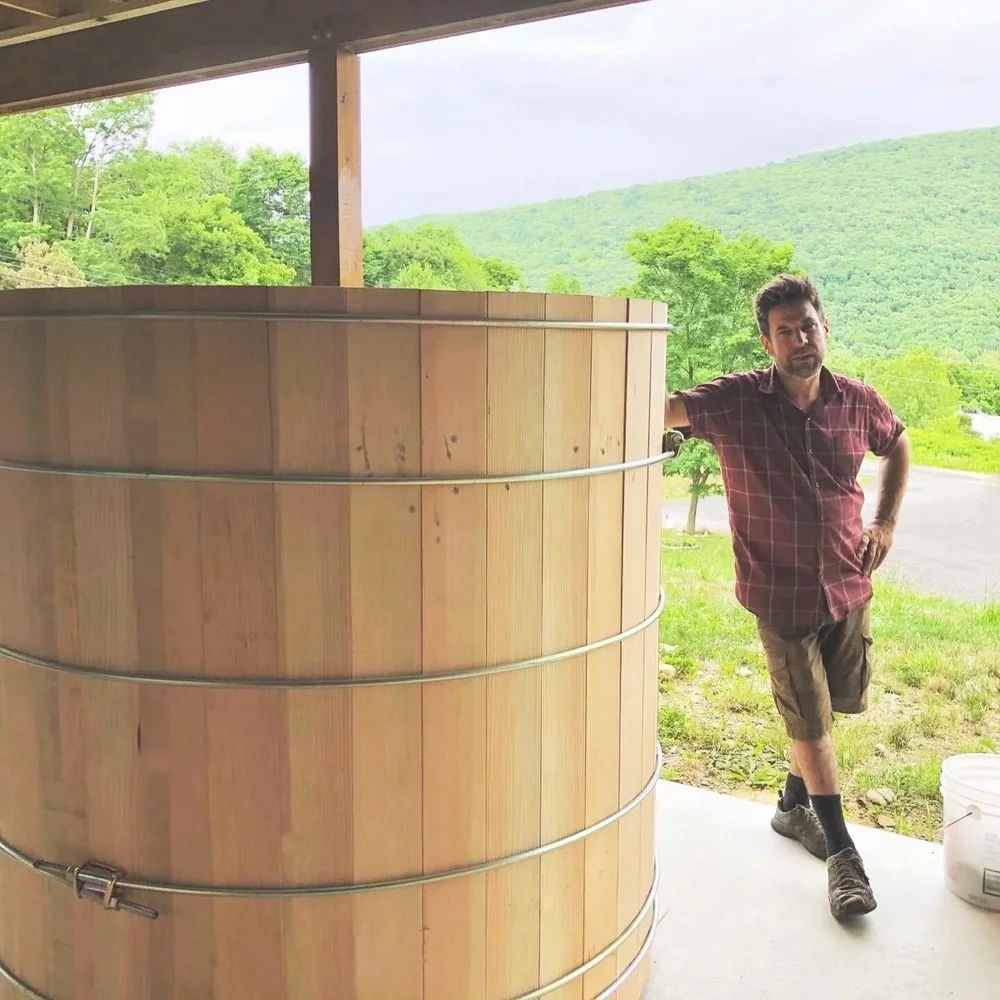
The cooperage construction of a Hudson Valley Hot Tubs cedar tub — stave and band, no adhesives — also behaves differently than a rigid shell. In the first 24 to 72 hours of initial fill, staves absorb water and swell, forming a natural seal. Some minor seeping between staves in that window is normal and expected. After seasoning, the tub becomes water-tight through wood-to-wood contact. John Cox walks every buyer through this at installation.
Water chemistry balanced weekly. Filter cleaned monthly. Full drain and refill every 3 to 4 months. Exterior wood treated annually. Bands checked for tension each spring.
That schedule — maintained consistently — is what keeps a cedar tub in service for 20+ years.
The maintenance schedule
What to do
and when
Every owner receives this schedule at installation. These intervals are based on typical residential use in Hudson Valley and Catskills conditions — four seasons, hard winters, variable humidity.
Water Chemistry
- Test pH with test strips or digital tester — target 7.2 to 7.8
- Test total alkalinity — target 80 to 120 ppm
- Check sanitizer level (chlorine or bromine)
- Adjust any out-of-range values before next soak
- Rinse cover and wipe seating surfaces if visible residue
Filter and Surface
- Remove filter cartridge and rinse thoroughly with garden hose
- Inspect filter housing for debris buildup
- Wipe down interior waterline with soft cloth
- Check fittings, jets, and skimmer for debris
- Test water with a complete 5-way test strip for full picture
Full Drain and Refill
- Drain tub completely using submersible pump or drain valve
- Scrub interior staves with soft brush and cedar-safe cleaner
- Rinse walls and floor thoroughly — no cleaner residue
- Clean filter cartridge or replace if degraded
- Refill with fresh water and re-balance chemistry baseline
Wood and Structure
- Inspect exterior stave surfaces — look for gray weathering or dry checking
- Apply cedar wood oil to exterior surfaces if needed
- Check metal band tension — tighten any loose bands
- Inspect fittings and plumbing connections for wear
- Replace filter cartridge if not replaced in past 12–18 months
Water chemistry
Target ranges
for cedar tubs
Cedar-specific water chemistry follows the same core parameters as any hot tub, with a few important notes for wood. Cedar's natural antimicrobial properties mean many owners maintain excellent water quality at the lower end of these ranges.
| Parameter | Target Range | Notes for Cedar |
|---|---|---|
| pH | 7.2–7.8 | Critical for wood health. Low pH (acidic) breaks down cedar over time. High pH reduces sanitizer effectiveness. Test first, adjust all others second. |
| Total Alkalinity | 80–120 ppm | Stabilizes pH swings. Adjust alkalinity before adjusting pH. Sodium bicarbonate raises it; sodium bisulfate lowers it. |
| Chlorine (free) | 1–3 ppm | Effective sanitizer. Keep at the low end — cedar tubs do not need aggressive chlorine levels. Shock treat after heavy use or if water clarity drops. |
| Bromine | 2–4 ppm | Alternative to chlorine. More stable at varying temperatures, gentler on wood. Popular with Hudson Valley owners who soak at lower temperatures. |
| Calcium Hardness | 100–200 ppm | Less critical for cedar than acrylic but affects overall water balance. Very soft water can leach tannins from the wood, temporarily discoloring the water. |
| Total Dissolved Solids | Below 1,500 ppm | Primary reason to drain and refill. When TDS climbs, water becomes progressively harder to balance — a complete drain resets the baseline. |
Note: New cedar tubs may show light tannin coloring in the water during the first few weeks of use. This is normal — cedar leaches tannins initially. The effect diminishes over time and does not affect water safety or chemistry balance.
Wood-specific care
Interior vs. exterior —
different requirements
The interior and exterior of a cedar hot tub have different care needs. A common mistake is treating the interior the way you would the exterior. The two surfaces behave differently.
Interior staves — let them season naturally
Interior surfaces develop their own protective layer through water immersion. Do not apply oils, sealants, or stains to interior cedar staves — they will contaminate your water and interfere with the natural seasoning process. Clean with a cedar-safe cleaner at each drain cycle and nothing else. The interior gets better with time on its own.
Exterior surfaces — annual treatment
Exterior cedar exposed to sun, rain, snow, and freeze-thaw cycles will weather to a silver-gray over time if untreated. This is harmless to the wood's structural integrity, but if you prefer to maintain the warm cedar color, apply a penetrating cedar oil or exterior wood sealant once or twice per year. In our workshop in Tivoli, we use a penetrating oil rather than a surface sealant — it nourishes the wood without peeling.
Band tension — annual check
The metal banding on a cooperage-style cedar tub can loosen slightly as the wood goes through seasonal expansion and contraction cycles — particularly in Hudson Valley winters. A quick inspection each spring, with a wrench to retighten any loose bands, keeps the stave assembly under proper pressure. If you notice any stave movement or increased seeping, check band tension first. John Cox provides this service as part of any maintenance visit.
Cover care
A quality insulated cover is one of the best maintenance investments. It reduces heat loss (cutting energy costs significantly), keeps debris out between uses, and reduces evaporation — slowing the rate at which water chemistry drifts. Rinse the underside of the cover when you clean the tub surface. Replace the cover when foam cores become waterlogged — usually every 5 to 7 years.
"In 15 years of building cedar tubs for Hudson Valley properties, the tubs that have lasted longest share one common thread: their owners stay on top of water chemistry from the start. The wood can handle almost anything. It's the water that needs managing. Get the chemistry right, drain on schedule, and a cooperage-built cedar tub will outlast anything else you could put in your backyard."John Cox — Cedar hot tub craftsman, Hudson Valley Hot Tubs, Tivoli NY
Every installation includes
a full owner walkthrough
John Cox walks every buyer through the full maintenance routine at installation — chemistry, schedule, seasonality, what to watch for in the first year. You leave knowing exactly what your tub needs.
See Our Work Schedule a ConsultationCommon maintenance questions
Answered by
the builder
How often do you change the water in a cedar hot tub?
Every 3 to 4 months with regular use. A complete drain, interior scrub, and refill twice per year keeps a cedar tub in excellent condition. If you soak daily or have multiple users, drain more frequently — when TDS climbs, water becomes progressively harder to balance.
Can you use bromine in a cedar hot tub?
Yes — bromine is gentler on cedar than aggressive chlorine regimens and works well at the lower temperatures some cedar tub owners prefer. It is more stable in warm water and maintains consistent levels more easily than chlorine in an uncovered outdoor tub.
How do you season a new cedar hot tub?
Fill the tub and let it soak for 24 to 72 hours before heating. This allows staves to absorb water, swell, and form a natural seal. Minor seeping between staves in that window is expected. John Cox walks every buyer through initial seasoning at installation — it is not something you should have to figure out on your own.
How do you clean the inside of a cedar hot tub?
After draining, scrub interior surfaces with a soft brush and a diluted cedar-safe cleaner. Avoid bleach, abrasive pads, and strong detergents — they damage the wood. Rinse thoroughly before refilling. Do not apply any oils, sealants, or stains to interior surfaces.
Can you use Epsom salt in a cedar hot tub?
Yes, in moderation. Epsom salt is a common addition for muscle recovery soaking and is gentler on cedar than heavy chemical loads. Keep the concentration reasonable — high mineral content over time requires more frequent draining to reset the water baseline.
How do you keep cedar from rotting in a hot tub?
Consistent water chemistry is the primary defense. Cedar naturally resists rot — it contains thujaplicin, a natural preservative — but poorly balanced, acidic water accelerates wood breakdown over years. Keep pH in the 7.2 to 7.8 range and drain and refill on schedule. Annual exterior wood oil treatment protects above-water surfaces.
How long does a cedar hot tub last with proper maintenance?
20 to 30 years or more. The cooperage construction actually tightens over time as the wood absorbs water. Cedar tubs maintained consistently outlast two or three acrylic hot tub replacements over the same period. John Cox has installed tubs in the early 2010s that are still in regular service.
What do I do if my cedar tub starts leaking?
A new tub may seep between staves during initial seasoning — this is normal and stops within 24 to 72 hours. If an established tub develops a new leak, it is most often a fitting or plumbing connection, not the staves. Check fittings first. If bands have loosened significantly, tightening them resolves most stave seeping. Call John Cox directly if you are unsure — (917) 578-9948.
Questions about your cedar tub?
Call John Cox directly. He built it — he can answer any maintenance question, schedule a service visit, or talk through what your tub needs.
Call (917) 578-9948